
Custom vs Semi-Custom Cabinets Explained
Custom Cabinets in Pittsburgh, PA
Quick Take: Custom and semi-custom cabinets both deliver strong results, but the right choice depends on your home's layout, your design goals, and your timeline. Pittsburgh homeowners with older homes often find one option is a much better fit than the other. This guide explains exactly what sets them apart.
You've started researching cabinets and quickly realized there's a lot to sort through. Custom, semi-custom, stock. Different price points, different lead times, different levels of design control. It's easy to feel like you need a design degree just to understand the options.
The good news is that the decision is simpler than it looks. Once you understand what each cabinet type actually offers, the right fit for your home usually becomes clear. If you're planning a kitchen or bath remodeling project in Pittsburgh, this guide walks you through everything you need to know before making a single selection.
Cabinets are the most visible part of any kitchen or bathroom. They set the tone for the whole space. Before you start comparing finishes and door styles, it helps to get clear on the two main categories Pittsburgh homeowners are weighing and what actually separates them.
What's the Difference Between Custom and Semi-Custom Cabinets?
Think of cabinets on a spectrum. At one end, you have stock cabinets. These come in fixed sizes and a limited range of finishes. They're ready quickly and cost the least, but there's almost no room to adjust anything.
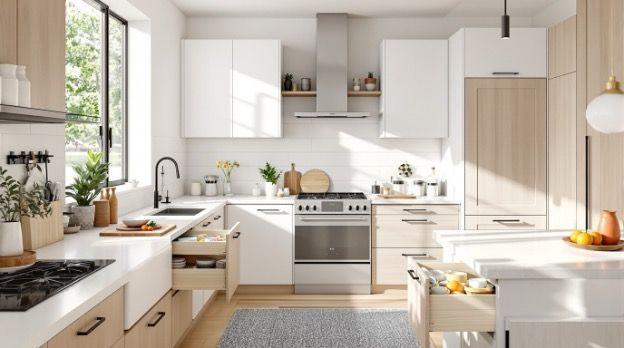
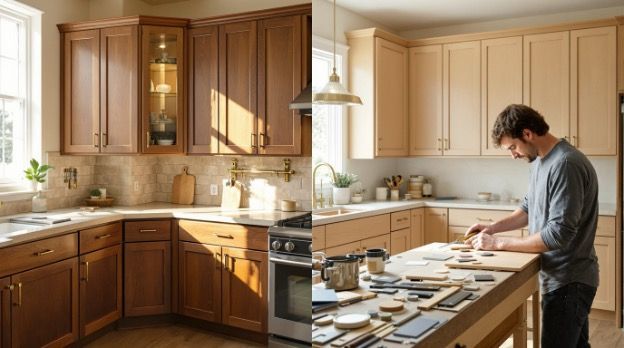
Semi-custom cabinetry sits in the middle. You're choosing from an established catalog of sizes, styles, and finishes, but manufacturers offer real variations. You can adjust widths, select from multiple wood species, and add features like soft-close hinges or upgraded hardware options.
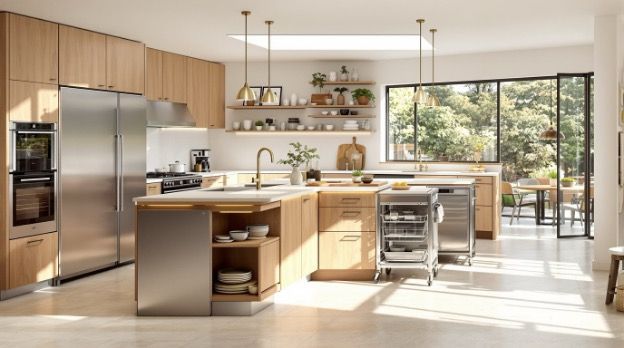
Custom cabinets are built entirely from scratch to your specifications. Every dimension, material, and detail is decided by you and your designer. Nothing is pulled from a catalog. Our team at Jacob Evans works with clients on both options daily, and the starting point is always the same: understanding the home first. Take a closer look at our kitchen cabinets page to see what we carry in our showroom.
What Semi-Custom Cabinetry Actually Gives You
Semi-custom gets a bad reputation it doesn't deserve. For most Pittsburgh kitchens, it delivers everything a homeowner actually needs. The range of wood species, hardware options, and finishes available through today's manufacturers is genuinely wide.
Here's what you can typically customize with semi-custom cabinetry:
- Wood species: Choose from maple, cherry, oak, hickory, and more depending on the manufacturer.
- Door styles: Shaker, raised panel, flat panel, and dozens of variations in between.
- Hardware options: Pulls, knobs, hinges, and soft-close mechanisms in a wide range of finishes.
- Interior features: Pull-out shelves, drawer inserts, and organizational storage solutions are standard additions.
- Sizing modifications: Most manufacturers offer width adjustments in 3-inch increments.
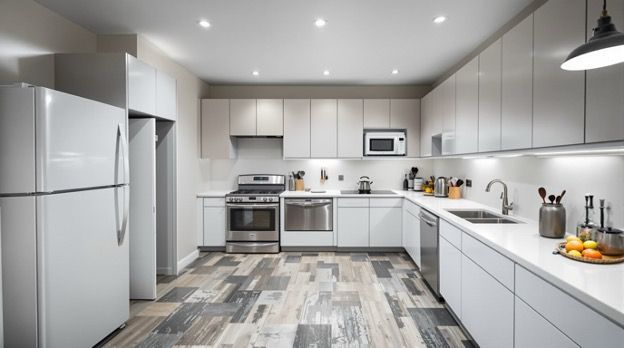
Most people can't tell the difference between a well-executed semi-custom kitchen and a fully custom one once it's installed. For homeowners with standard layouts, semi-custom covers the full range of what they need at a price point that works.
When Custom Cabinets Are the Smarter Call
Non-Standard Layouts in Older Pittsburgh Homes
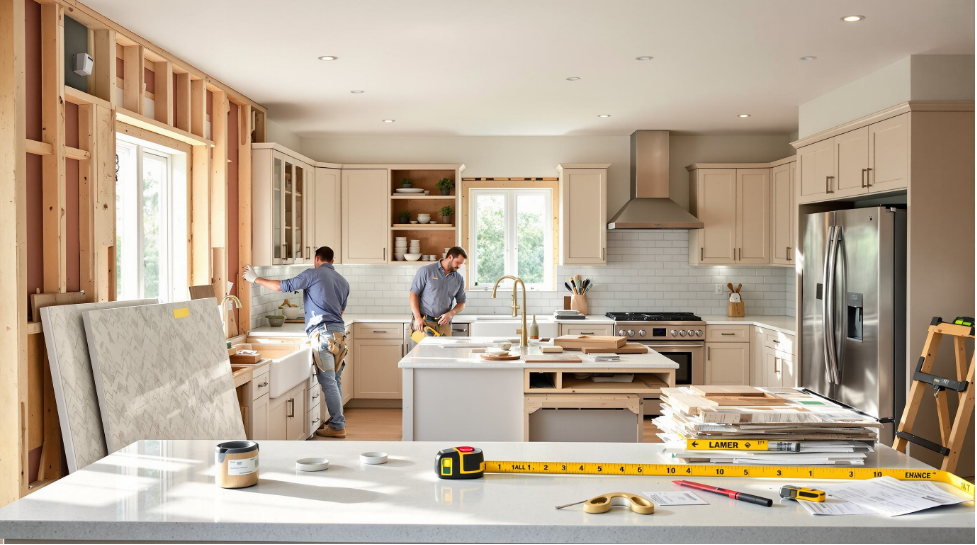
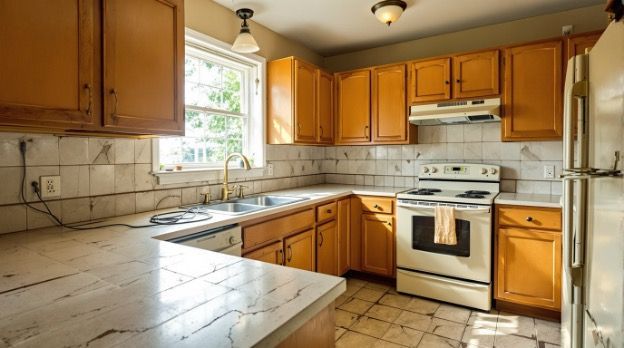
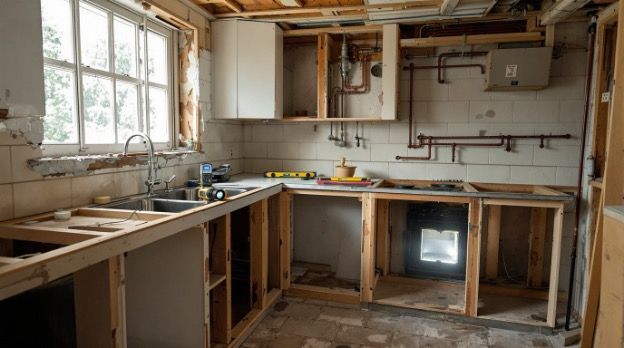
Many Pittsburgh homes in South Hills, North Hills, and the surrounding suburbs were built between the 1970s and 1990s. These are solid, well-built houses. But their kitchens often have awkward angles, low soffits, or dimensions that simply don't match standard cabinet sizes.
When a semi-custom cabinet is 3 inches too narrow or leaves an odd gap above the refrigerator, filler pieces start to pile up. That's where custom cabinets earn their cost. A fully custom build fits the room as it actually exists, not as a catalog assumes it should. For homes with genuinely non-standard layouts, custom is usually the cleaner and more cost-effective long-term answer.
When Your Design Vision Goes Beyond the Catalog
Some homeowners come in knowing exactly what they want. A specific wood grain, a door profile that doesn't exist in any manufacturer's lineup, or a layout that requires a cabinet built to an unusual height or depth.
Semi-custom can stretch pretty far, but it has real limits. If you keep hitting those limits during the selection process, custom is the honest answer. Our designers will tell you plainly which direction makes sense for your project rather than push you toward either option.

Custom vs. Semi-Custom: The Side-by-Side Breakdown
Here's a straightforward comparison across the factors that matter most to Pittsburgh homeowners. Cost figures reflect industry-standard installed pricing per linear foot.
| Feature | Semi-Custom | Custom |
|---|---|---|
| Price range (per linear ft.) | $150 to $700 | $500 to $1,200 |
| Lead time | 6 to 10 weeks | $500 to $1,200 |
| Sizing flexibility | Incremental adjustments | Fully made-to-measure |
| Wood species options | Several (manufacturer-dependent) | Virtually unlimited |
| Hardware options | Wide selection from catalog | Any hardware you choose |
| Storage solutions | Standard add-ons available | Fully tailored to your layout |
Neither option is universally better. Use this as a starting point for the conversation, not a final verdict. Your specific kitchen, your timeline, and how much design control you actually need will point you in the right direction.
Storage Solutions Across Both Cabinet Types
One thing that surprises a lot of homeowners: smart storage isn't exclusive to custom cabinets. Semi-custom manufacturers have invested heavily in interior organization, and the options available today are solid across both categories.
Both cabinet types can include:
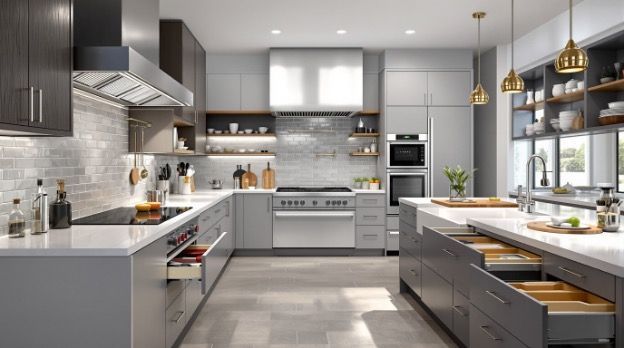
- Pull-out base cabinet shelves that eliminate the need to reach to the back
- Deep drawer inserts for pots, pans, and lids
- Spice pull-outs beside the range
- Trash and recycling pull-outs built into the base
- Lazy Susans and corner cabinet solutions
Where custom pulls ahead is when storage needs to be designed around exactly how you cook. If you need a cabinet built for a specific appliance or a drawer sized for a particular item, that precision isn't available in a catalog. For most homeowners, though, semi-custom organization features handle everyday needs well. See how we approach this across both kitchen and bathroom projects.

How to Make This Decision With Confidence
Reading specs online only gets you so far. Seeing the materials in person is what actually moves the decision forward. At our Pittsburgh showroom, we carry products from four cabinet manufacturers, hundreds of door samples, and full finish displays. Touching the materials under real lighting changes how you evaluate what you're looking at.
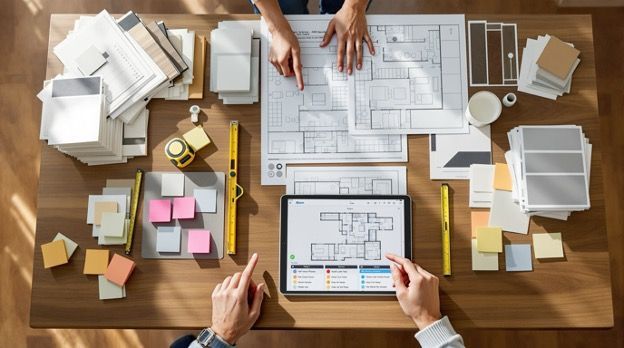
Our designers also create color renderings before anything is ordered or installed. You see your actual kitchen with your chosen cabinets, countertops, and layout on screen before a single piece ships. That step alone removes most of the second-guessing. We use the same process when working on bathroom remodeling projects with custom or semi-custom vanity cabinetry.
A practical rule: if your home has standard dimensions and your style fits within a manufacturer's catalog, semi-custom will serve you well. If your layout is irregular or your design vision is specific enough to keep bumping into catalog limits, custom is worth a serious look.
Conclusion
Both cabinet types can produce a kitchen or bathroom you'll be proud of for years. The decision really comes down to your home's layout, your design goals, and how much room you need to move outside a standard catalog. Getting clear on that early saves time and prevents costly mid-project changes.
If your Pittsburgh kitchen or bathroom is ready for an update and you're not sure where to start, contact us to schedule a visit to our showroom. We'll help you figure out which direction makes the most sense for your space.