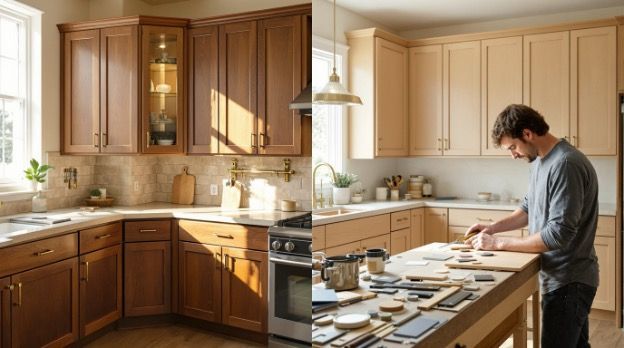

Storage-First Kitchen Design for Modern Homes
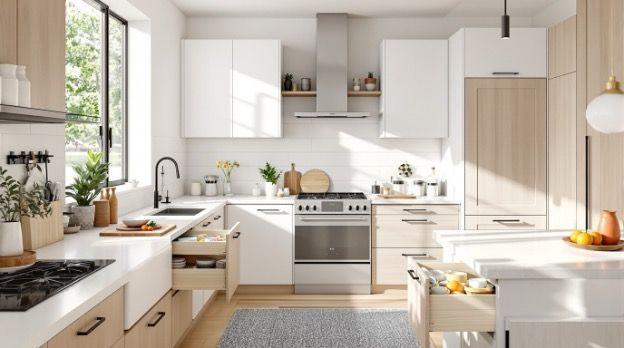
Kitchen Remodeling in Pittsburgh, PA: Storage Design
Quick Take: Many Pittsburgh homes built between the 1970s and 1990s were never designed for modern kitchen use. A storage-first approach means planning cabinet layout and pantry space around how your family cooks before any materials are chosen. Most homeowners are surprised by how much usable space was hiding in their existing footprint.
Opening a cabinet to find stacked pans falling forward is a daily frustration for a lot of Pittsburgh homeowners. So is losing counter space to the coffee maker, the toaster, and a knife block with nowhere to go.
Most people blame themselves for not being organized enough. The real issue is that the kitchen was never designed to hold everything a modern household needs. That's a design problem, and it has a design solution.
Why Older Pittsburgh Homes Were Never Built for Modern Kitchens
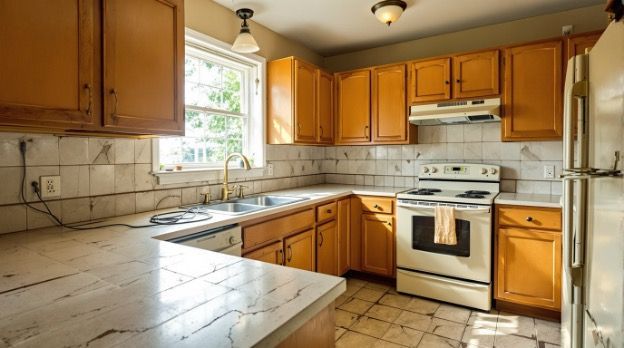
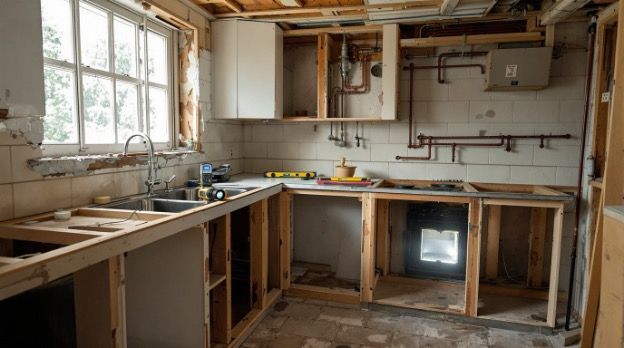
Homes across the South Hills and North Hills suburbs were built in an era when kitchens looked very different. Families had fewer appliances, bought groceries more frequently, and stored far less food at one time. Cabinet runs were short. Pantries were small or skipped entirely.
That worked fine for 1978. Running a stand mixer, an air fryer, and a Sunday meal-prep operation is a different story. The bones of these homes are solid. The original storage layout just wasn't built for how people cook now.
That gap is why kitchen remodeling in Pittsburgh so often starts with a storage conversation rather than a cabinet style conversation.
What "Storage-First" Design Actually Means
Storage-first design means layout decisions happen before aesthetic ones. Cabinet run length, island depth, and pantry placement are all planned around daily kitchen use first.
In practice, this changes a lot of decisions that homeowners assume are just style choices.
Here are a few examples of how priorities shift when storage leads the process:
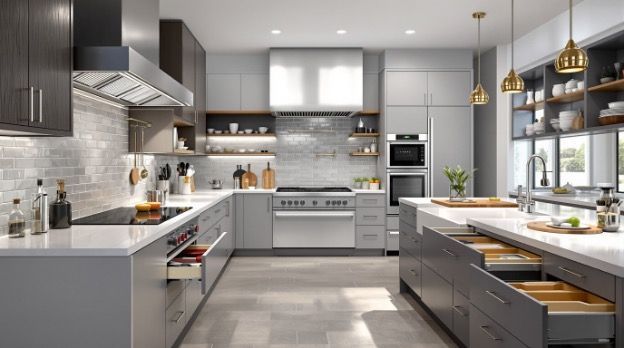
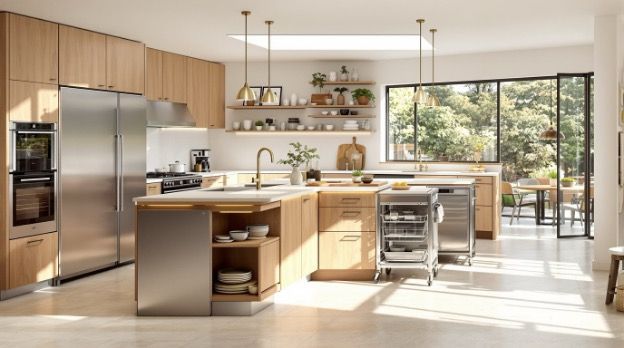
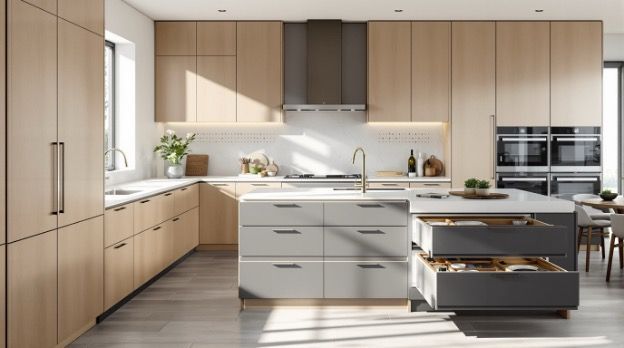
- Island design: A deep-drawer island adds meaningful daily storage. Open decorative shelving on an island looks great in photos but holds almost nothing useful.
- Upper vs. pantry cabinets: A tall pantry cabinet holds more dry goods than three rows of uppers. It's also much easier to reach.
- Appliance placement: An appliance garage keeps counters clear without hiding anything far from reach. Permanent countertop placement means permanent clutter.
- Corner cabinet use: An ignored corner wastes 9 to 12 square feet of potential storage in most kitchens.
The Cabinet Configurations That Solve the Most Common Problems
Some configurations make a much bigger difference than others. Here are the ones that solve the storage problems Pittsburgh homeowners run into most often.
Pull-Out Shelves and Drawer Stacks
Standard base cabinets with fixed shelves leave a large portion of their depth unused. Most people can only reach the front half comfortably. Pull-out shelves bring everything forward and make the full cabinet depth accessible.
Drawer stacks work even better for pots, pans, and dry goods. A three-drawer base cabinet gives you three organized layers instead of one deep dark hole. They cost more than standard doors, but the daily usability difference is hard to argue with.
Corner Solutions That Actually Get Used
Corner cabinets are one of the most wasted spaces in older Pittsburgh kitchens. A basic lazy Susan helps, but the rotating trays still leave dead zones behind them. Pull-out corner systems and diagonal corner drawers use the space more completely. The right choice depends on the cabinet run dimensions, which is something a designer will measure before recommending anything.
Pantry Cabinets When There Is No Pantry Room
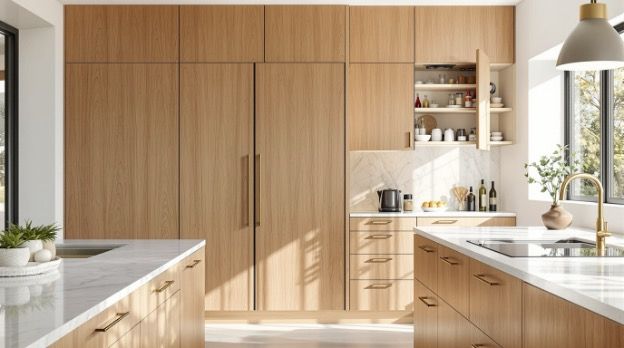
Tall pantry cabinets and pull-out pantry columns can work in kitchens with no dedicated pantry closet. A single 84-inch pantry cabinet holds a surprising amount when it's configured with pull-out shelves and door-mounted racks. Placement matters too. Getting this right early is one of the best reasons to plan storage before finalizing your kitchen cabinets in Pittsburgh.
Countertop Clutter Is a Storage Problem in Disguise
A crowded countertop isn't a cleaning problem. It's a sign that the kitchen doesn't have the right storage built in. When there's no good place to put something, it lives on the counter.
Appliance garages solve this for toasters, coffee makers, and small appliances. A pull-out spice rack beside the range keeps seasonings off the counter without putting them out of reach. Built-in knife storage inside a drawer is safer and cleaner than a block taking up six inches of counter space.
Hidden charging drawers handle phones, tablets, and cords that otherwise pile up near an outlet. A kitchen that feels calm and organized is usually one where the storage was planned before the countertops were chosen.
What We Ask Before Recommending a Single Cabinet
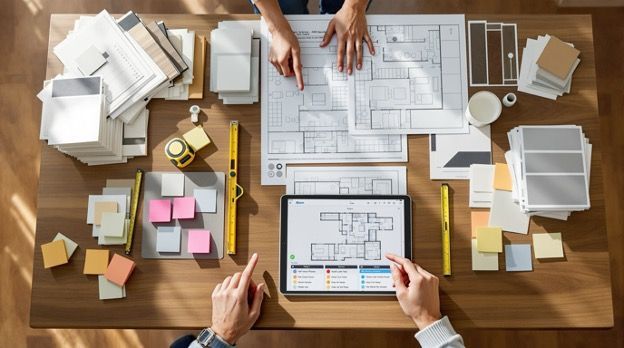
Storage planning is personal. A kitchen for a couple cooking together nightly looks different from one for a solo parent meal-prepping weekly. Before we recommend any configuration, we spend real time understanding how the kitchen is used day to day.
Some of the questions we ask: How many people are in the kitchen at once during a meal? Do you buy in bulk? Where do you keep your baking supplies versus your everyday pots? Those answers shape the layout in ways that no style preference quiz ever could.
With over 80 combined years of design experience, the Jacob Evans team has worked through these questions across every type of Pittsburgh kitchen. Homeowners always know their daily routine better than any floor plan shows. Listening first is the only way to get storage planning right.
The Honest Side of Storage Upgrades and Budget
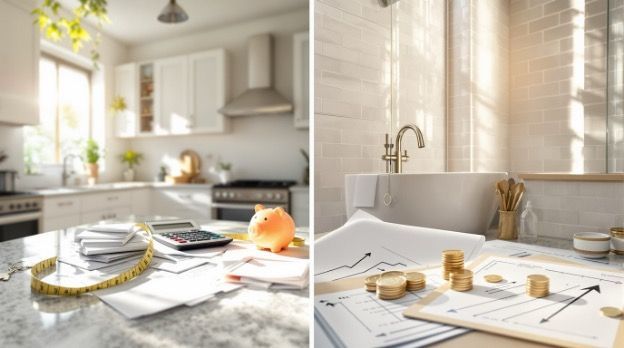
Pull-out shelves, drawer stacks, and pantry columns cost more upfront than standard fixed-shelf base cabinets. That's just the truth. The question is whether that extra cost is worth it over the life of the kitchen.
For most homeowners, it is. A kitchen remodel gets used every day for 15 to 20 years. Spending $1,500 to $4,000 more on storage upgrades works out to very little per day over that span. The frustration of a kitchen that never has enough room tends to outweigh what it costs to fix it right.
Seeing the options in person makes the decision easier. At the Jacob Evans showroom, you can open real cabinet configurations and pull out actual drawer stacks. That hands-on step tends to cut through the overwhelm pretty quickly.
Conclusion
Pittsburgh's older homes have a lot going for them. Solid construction, established neighborhoods, real square footage. The kitchens just weren't built for 2025. Storage-first design is how you close that gap without starting from scratch.
The goal isn't to maximize every inch for its own sake. It's to design around how your family actually lives and cooks before a single dollar is spent. Starting with storage means fewer surprises, better decisions, and a kitchen that works the way you need it to.
If you've been thinking about a kitchen update,
a conversation about storage is the right place to start. If a bathroom refresh is on your list too, our team handles
bathroom remodeling in Pittsburgh with the same design-first approach.